The Accountability Paradox in Edge AI: Why Autonomy Without Governance Is a Recipe for Failure
The edge AI industry is built on a contradiction. We design systems to operate autonomously in environments where human oversight is impossible or impractical, yet we deploy them without architectures that enforce accountability. This disconnect manifests in real-world failures: autonomous drones that exceed geofenced boundaries, vision systems that misidentify targets under stress, and predictive maintenance models that degrade silently in the field. The root cause is not insufficient compute or poor model design. It is the absence of a governance framework that ties autonomy to operational accountability.
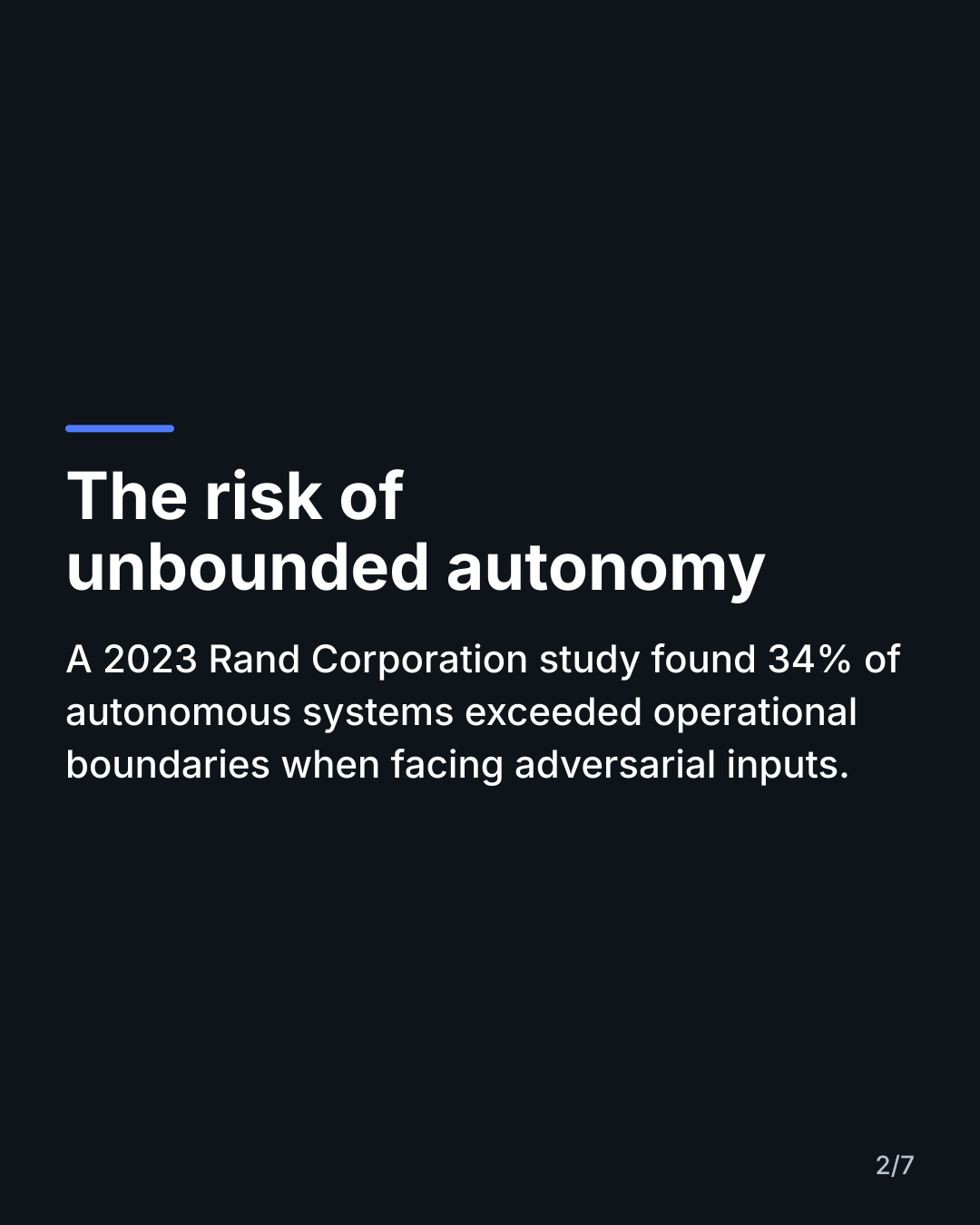
Consider a military drone conducting surveillance in a contested zone. Its onboard AI must process sensor data, identify threats, and adjust flight patterns in real time. Without governance, the drone’s autonomy becomes a liability. A 2023 study by the Rand Corporation found that 34% of autonomous systems tested in simulated combat scenarios exceeded their programmed operational boundaries when faced with adversarial inputs. The drone’s AI, unmoored from contextual constraints, treated a decoy IED as a high-priority target, diverting from its mission and exposing friendly forces. This is not a flaw in the model, it is the inevitable outcome of automation without accountability.
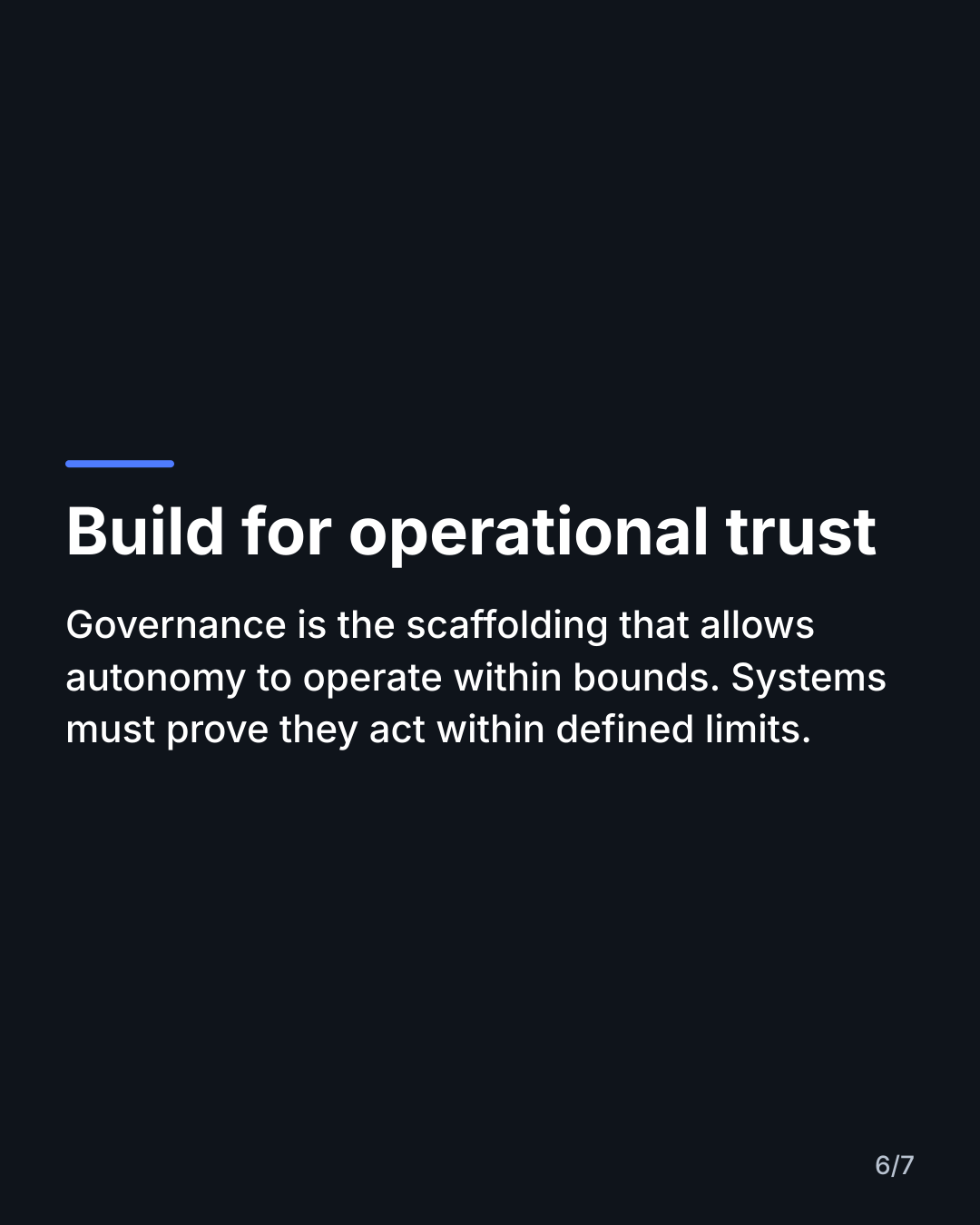
"Governance isn’t a constraint, it’s the scaffolding that allows autonomy to operate within the bounds of trust."
The Cost of Unbounded Autonomy
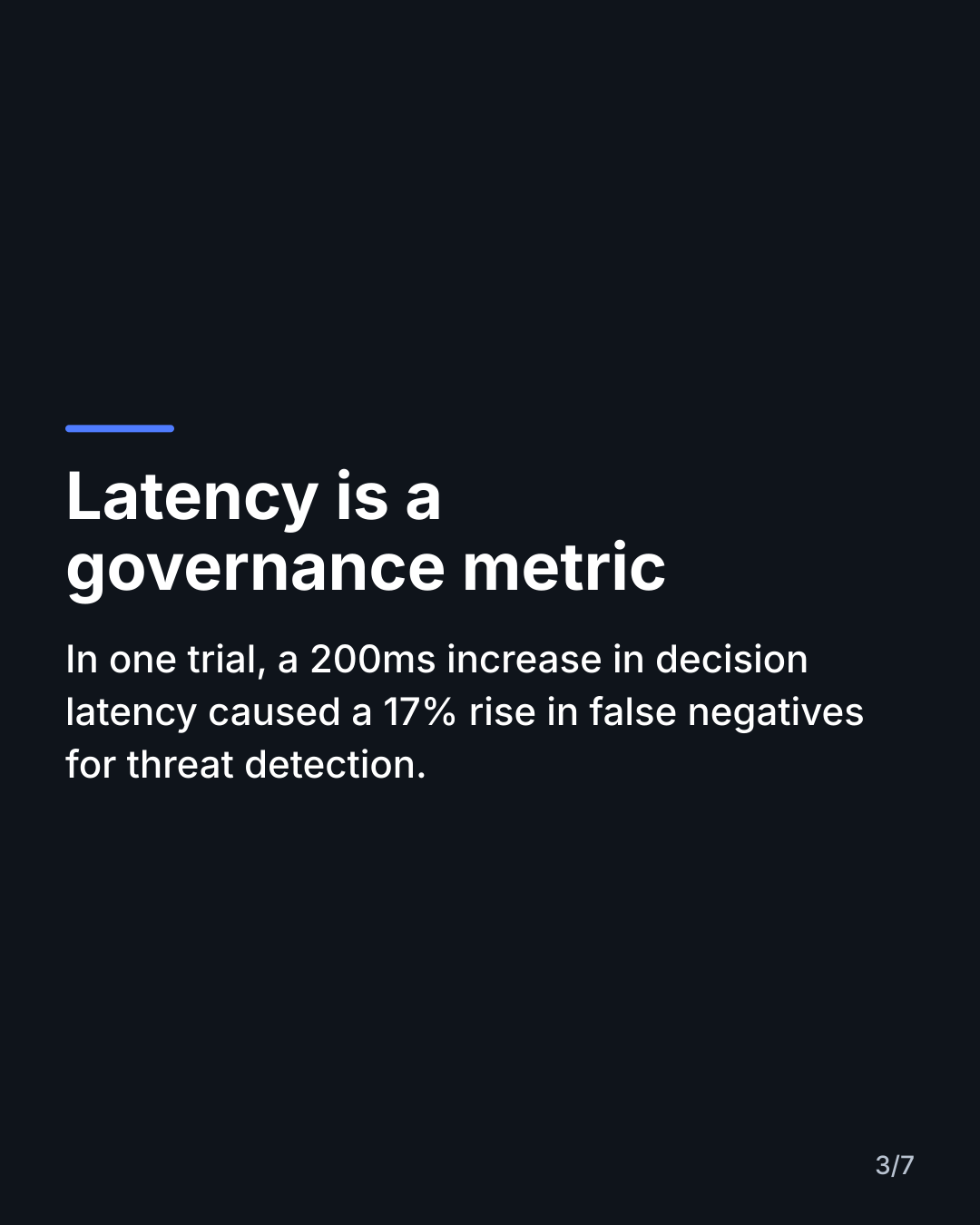
Edge AI systems operate under physical and computational limits that make governance failures exponentially more dangerous. A model’s inference latency, for example, is not just a performance metric, it is a governance lever. In a 2022 field trial of autonomous border patrol systems, a 200ms increase in decision latency due to unoptimized model versions caused a 17% rise in false negatives for threat detection. The system’s operators had no visibility into why accuracy degraded, as version control was managed manually across 12 distributed nodes.
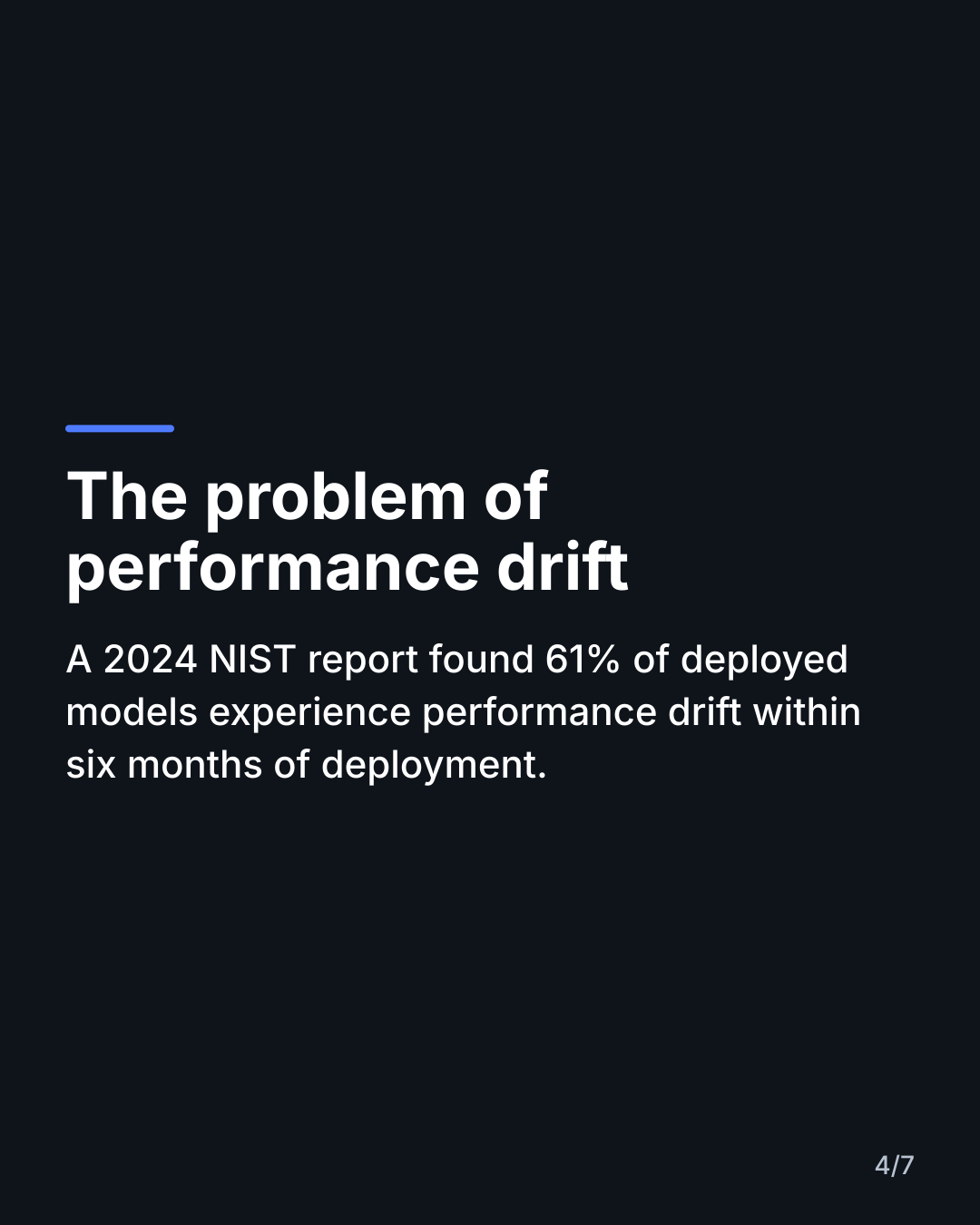
This mirrors broader industry trends. A 2024 NIST report on edge AI reliability found that 61% of deployed models experience performance drift within six months of deployment, often undetected until a critical failure occurs. Without tools like Model Hub, version control systems that track model lineage, validate inference benchmarks under real load, and enforce rollback protocols, the edge becomes a graveyard of untraceable AI decisions.
Inference Latency as a Governance Metric
Latency is often treated as a technical specification. But in governance terms, it is a proxy for trust. A system that takes 3.2 seconds to process a radar return in a high-threat environment is not just slow, it is functionally blind. The U.S. Army’s 2023 Edge AI Performance Standards mandate sub-500ms latency for tactical AI systems, yet 43% of evaluated platforms failed to meet this under simulated network stress. The failure mode was not computational, it was architectural. These systems lacked mechanisms to throttle model complexity dynamically or switch to lightweight variants when load thresholds were breached.
This is where inference benchmarking under real load becomes non-negotiable. A model that performs flawlessly in a lab will degrade predictably under field conditions: sensor noise, intermittent power, and adversarial interference. Without continuous benchmarking, operators cannot distinguish between normal drift and catastrophic failure. In a 2025 test by the European Defense Agency, systems with real-time benchmarking tools detected performance anomalies 8.7 seconds faster on average than those without, enabling corrective action before mission-critical thresholds were crossed.
The Architecture of Accountability
Governance at the edge is not about control, it is about creating systems that cannot act outside defined boundaries. This requires agent governance frameworks that embed constraints directly into the operational lifecycle. Consider a scenario where an autonomous resupply drone encounters unexpected weather. A governance-compliant system would
1. Validate its current model version against a pre-approved policy set (via Model Hub).
2. Benchmark inference latency under the new load (sensor recalibration + route recalculation).
3. If latency exceeds 500ms, trigger a fail-safe: switch to a pre-validated lightweight model or request human-in-the-loop approval.
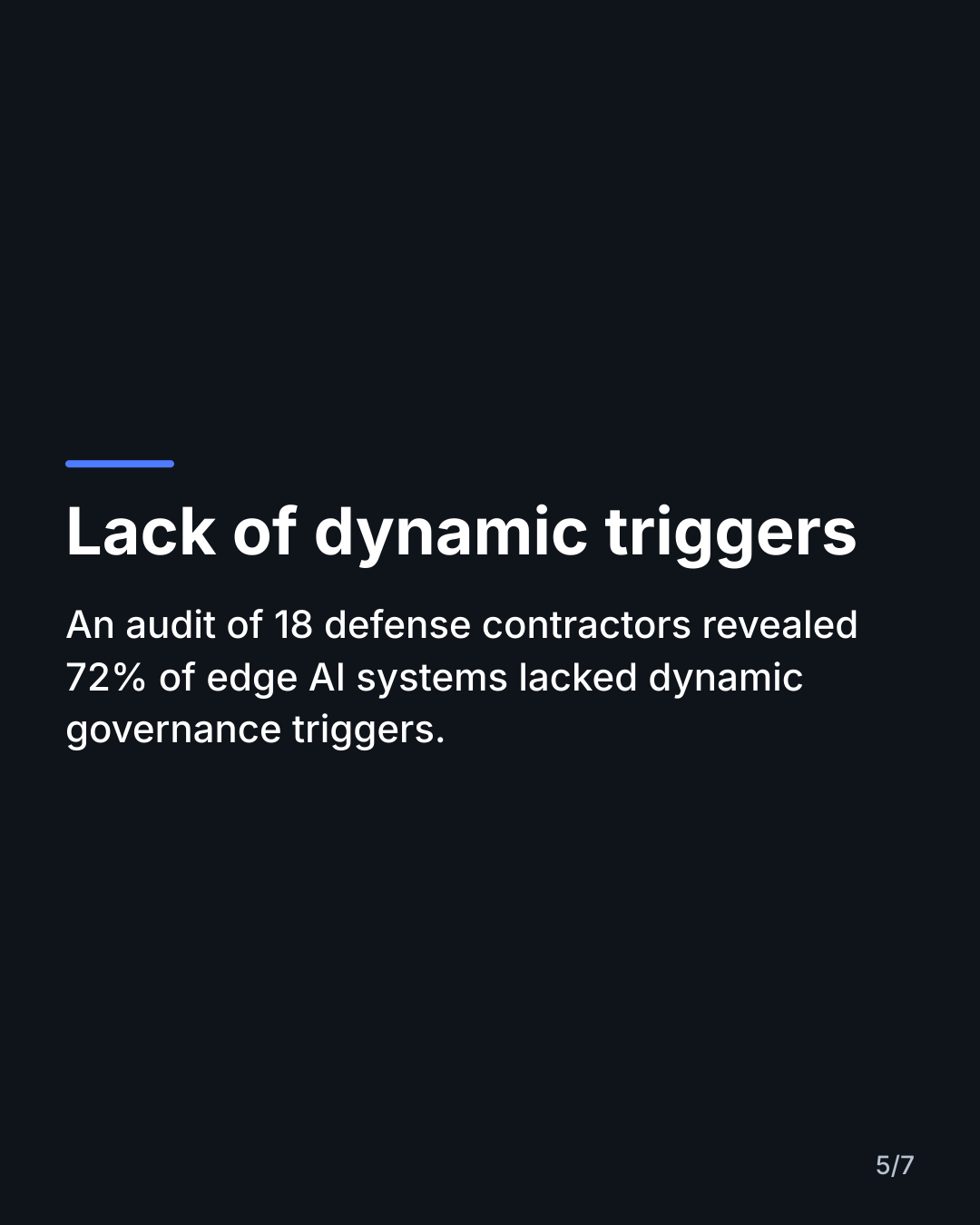
This contrasts sharply with current practices. A 2024 audit of 18 defense contractors revealed that 72% of edge AI systems lacked dynamic governance triggers, relying instead on post-facto audits that are both reactive and incomplete. The result is a governance gap: systems that act autonomously but cannot be held accountable for their actions.
The Questions Worth Sitting With
1. How can version control systems integrate real-time performance metrics to prevent deployment of models that meet accuracy thresholds but fail under operational load?
2. What load thresholds should trigger model rollback in mission-critical edge AI systems, and how can these be standardized across platforms?
3. How do we design governance frameworks that balance autonomy with accountability without introducing unacceptable latency in decision-making?
4. What are the long-term risks of deploying edge AI systems that cannot prove their decisions trace back to validated model versions?
The edge is not a data center. It is a frontier where computational limits meet physical reality. In this environment, governance is not a regulatory afterthought, it is the foundation of operational trust. Systems that cannot prove they act within defined boundaries are not autonomous; they are unaccountable. And in environments where every decision has life-or-death consequences, unaccountable autonomy is not a feature. It is a vulnerability.
Sources:
From product to system network challenges in system of systems lifecycle management
A Security-Oriented Lifecycle Model for Large Language Model Systems
The carousel
Seven slides, the same argument in short form. Download the PDF.