Sovereignty as a Foundation: How DeclassDB Proves Architecture Enables Trust in Open Systems
The edge is not a place but a condition of autonomy. When a system operates under constraints, bandwidth, connectivity, or trust, it reveals the true architecture of its design. DeclassDB, with its 1.08 million+ declassified records from seven federal archives, is not merely a repository. It is a proof of concept: a system built to demonstrate that sovereignty is not a compromise between access and security, but a principle embedded in the stack.
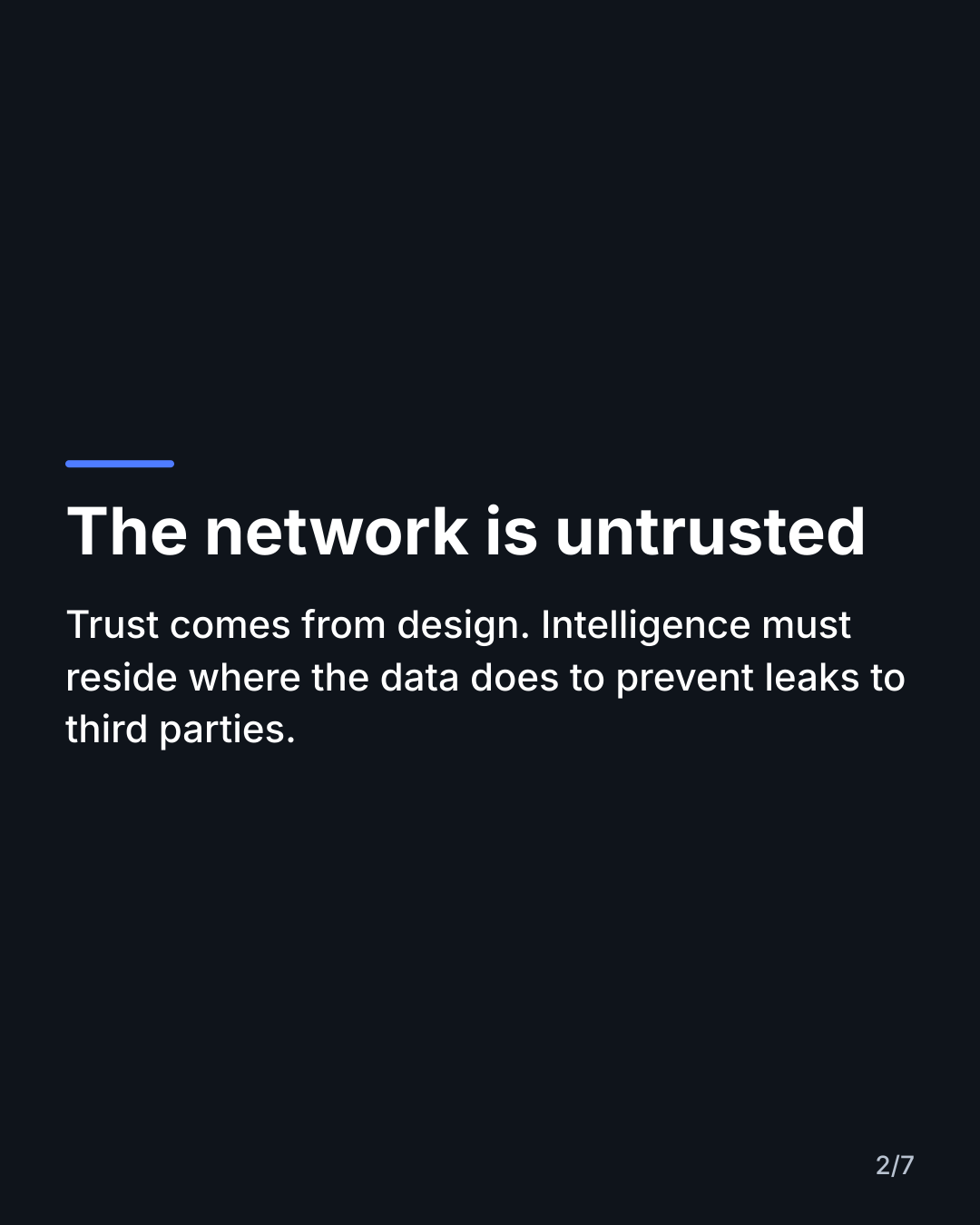
Consider a researcher querying Cold War-era cables. The system must surface relevant documents while ensuring no metadata, no query pattern, no partial result leaks anything to a third party. DeclassDB achieves this by embedding intelligence locally, in the browser, using semantic search models that never transmit raw data. This is not a feature. It is not merely a privacy measure. It is the architecture of trust itself, a system designed to operate under the assumption that the network is untrusted, and the user must retain control.
The Architecture of Bounded Autonomy
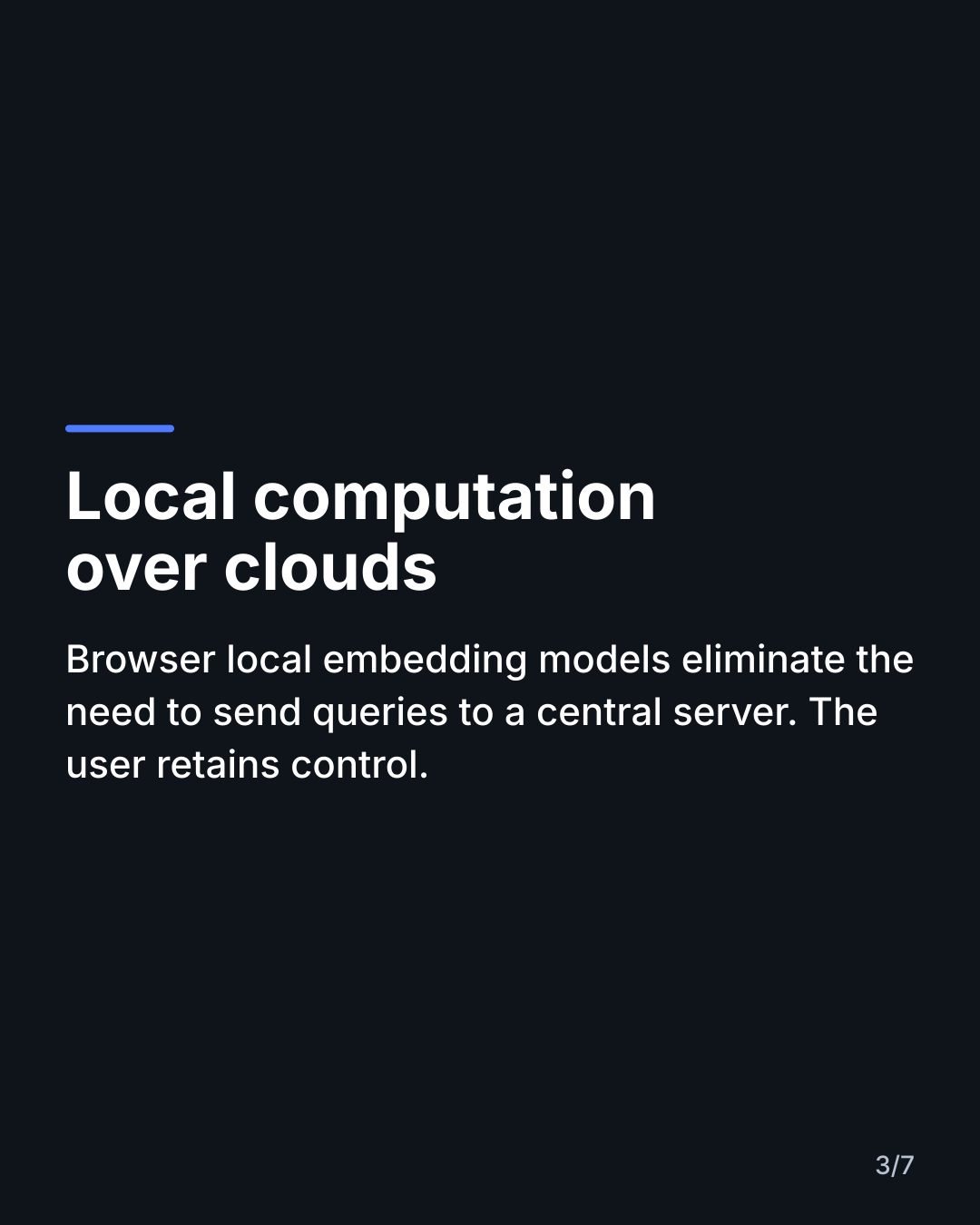
DeclassDB’s design hinges on a simple premise: intelligence must reside where the data does. By deploying a browser-local embedding model, it eliminates the need to send queries or documents to a centralized server. The user’s machine handles the computation, ensuring that no third party, cloud provider, adversary, or even the system’s own administrators, can observe the interaction. This is not “privacy by obscurity.” It is privacy by design, enforced through the separation of computation and communication.
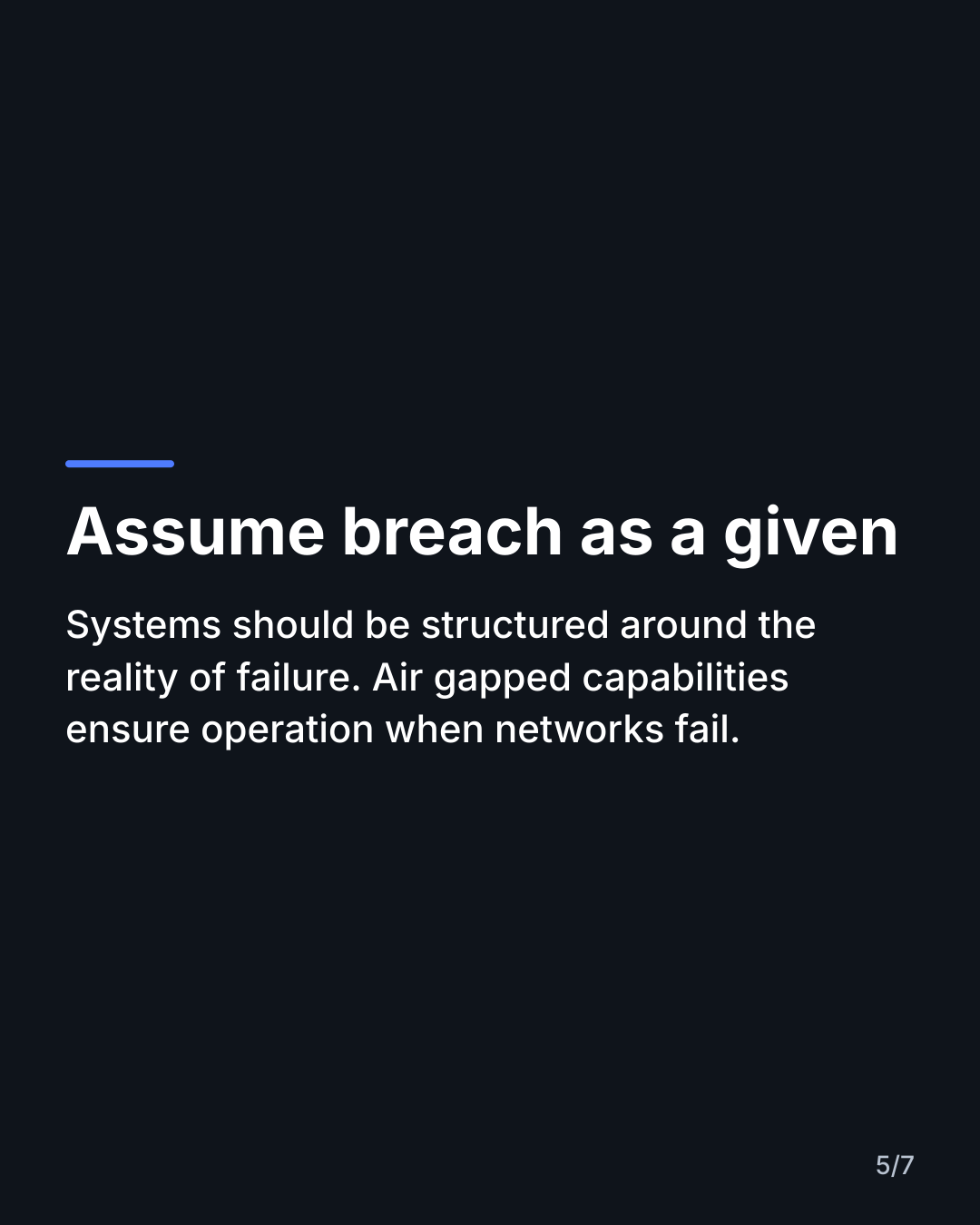
The same logic extends to its optional bring-your-own-key cloud AI integration. When connectivity permits, users may offload heavier computations to a private cloud instance, encrypted end-to-end with keys they control. There is no shared infrastructure, no backdoor, no implicit trust in a vendor’s security claims. The system assumes breach as a given and structures itself around that reality.
This mirrors the principles underlying AriaOS, the classified-document intelligence platform built on the same semantic-search engine. While DeclassDB operates in the public domain, AriaOS applies the same architecture to federal-side systems, where the stakes of data leakage are exponentially higher. Both systems prove that sovereignty is not a binary choice between openness and secrecy, but a spectrum of design decisions that prioritize control at every layer.
Sovereignty as a User Experience
The tension between access and control is not new. For decades, intelligence systems have struggled to balance the need for rapid information retrieval with the imperative to protect sensitive data. Traditional solutions often rely on centralized gatekeeping, firewalls, access controls, or manual review processes. These approaches assume that security can be bolted onto a system as an afterthought. DeclassDB rejects this. Its architecture embeds sovereignty as a user experience, making autonomy intuitive rather than burdensome.
Take its support for Ollama, an open-source inference framework. By allowing users to run locally hosted models without requiring internet access, DeclassDB ensures that even the act of generating embeddings remains under the user’s jurisdiction. This is not about technical convenience. It is about redefining the relationship between operator and system: the user is not a consumer of a service but an actor within a bounded, trustworthy domain.
This philosophy extends to its air-gapped capabilities. In environments where network exposure is a liability, DeclassDB’s browser-local model ensures operation without compromise. The system does not “wait for the cloud to respond” or “hope the network is available.” It functions under the inverse assumption: the network will fail, and the system must still work.
The Proof of Concept
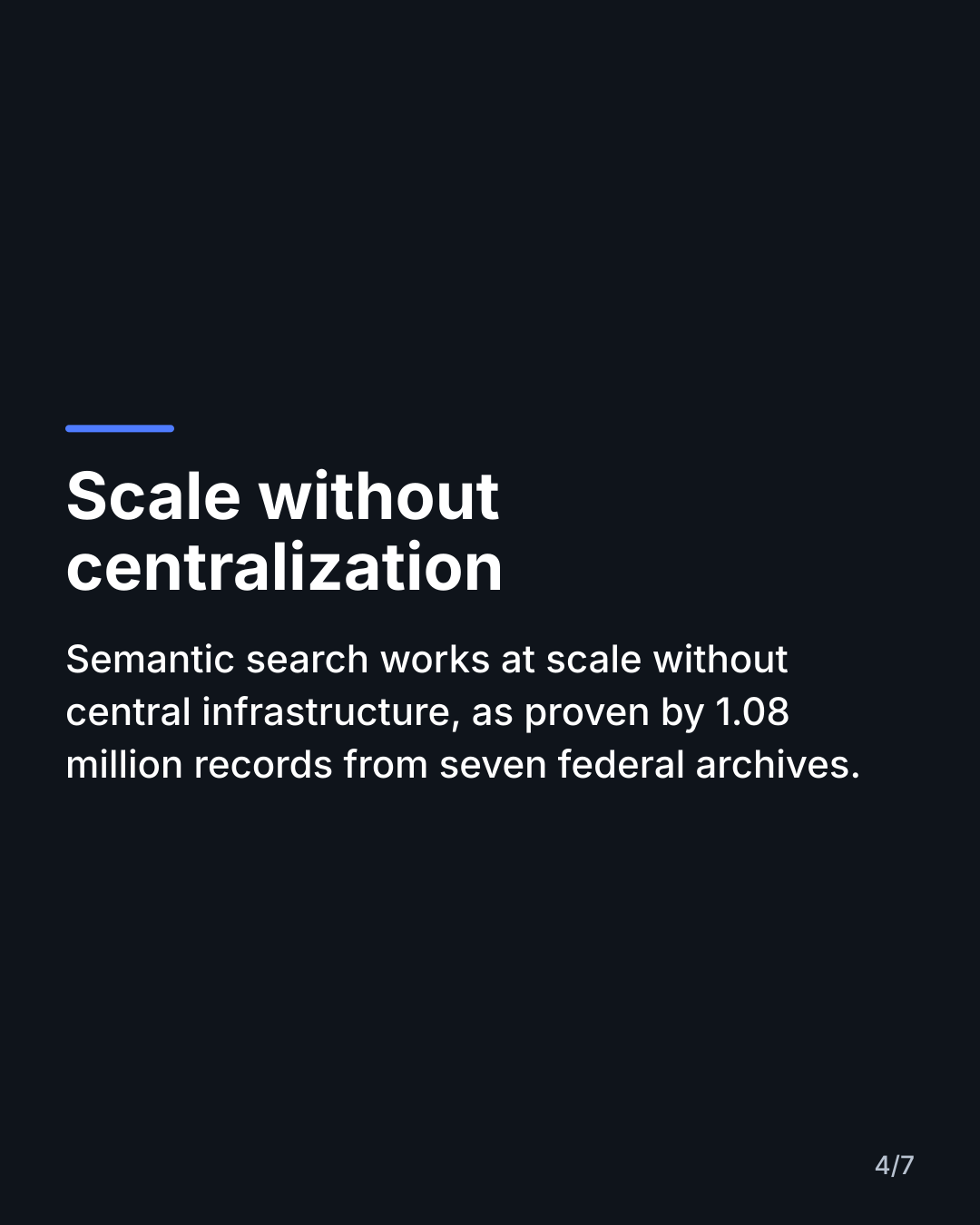
DeclassDB’s existence is a rebuttal to the myth that sovereign systems are inherently limited in scale or utility. With 1.08 million records from archives including the CIA’s CREST, FBI Vault, and National Archives, it demonstrates that semantic search at scale need not depend on centralized infrastructure. The same engine that powers this public tool can, with appropriate security hardening, underpin classified systems like AriaOS. The transition from public to federal use is not a leap, it is a continuation of the same architectural logic applied to higher-risk environments.
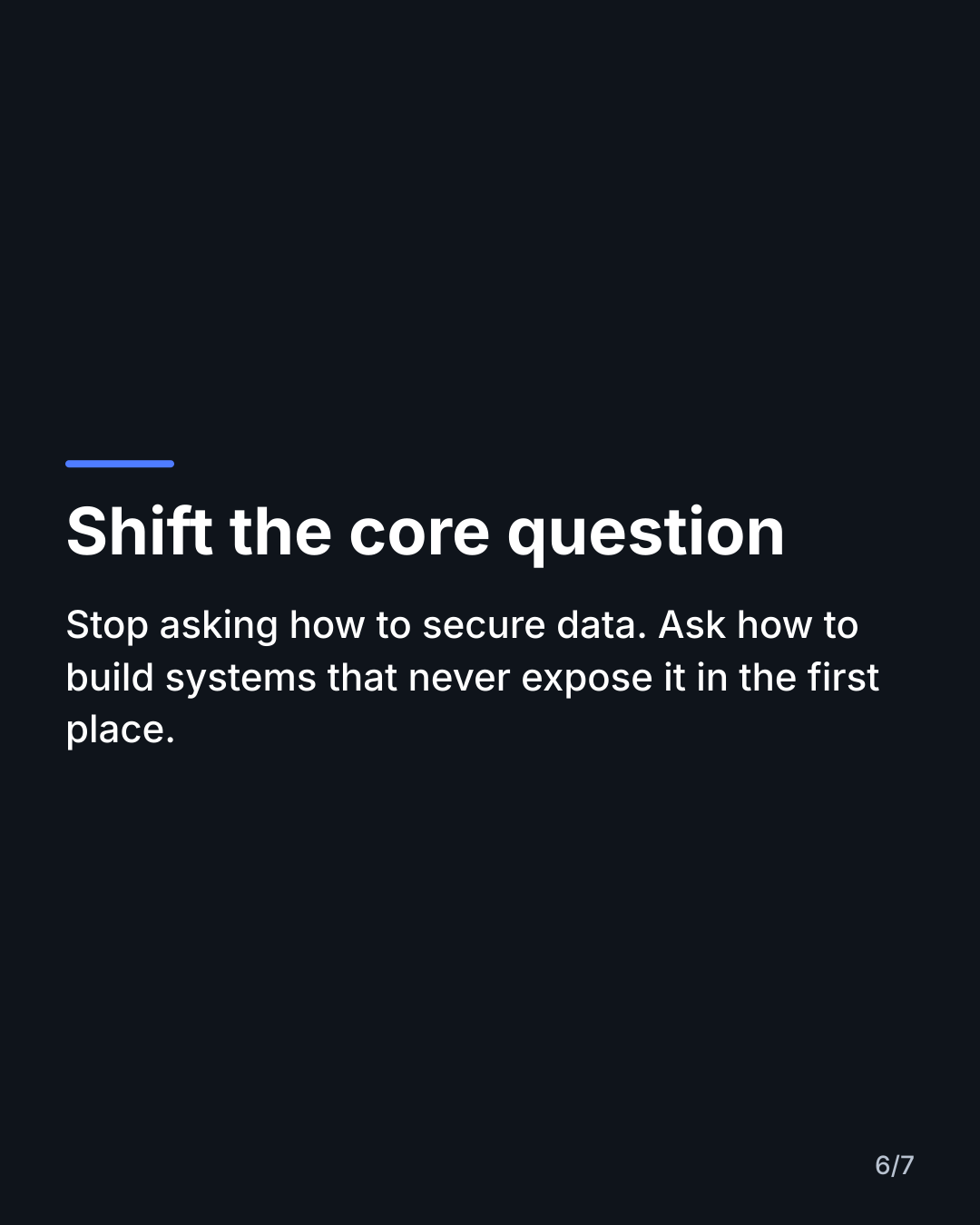
This duality is intentional. By open-sourcing the principles behind DeclassDB, the project becomes more than a tool. It becomes a blueprint. Researchers, developers, and operators can study its design, validate its constraints, and adapt its patterns to their own sovereignty requirements. In doing so, it shifts the conversation from “How do we secure data?” to “How do we build systems that never expose it in the first place?”
The questions worth sitting with:
1. How might browser-local embeddings redefine access controls in systems where user privacy and operational security collide?
2. Can the same principles of bounded autonomy be extended to real-time sensor data or mission-critical workflows?
3. What tradeoffs arise when scaling air-gapped architectures to multi-user or collaborative environments?
4. How do we ensure that sovereignty-by-design does not become a barrier to innovation or interoperability?
5. What does it mean for a system to “assume breach,” and how can this mindset reshape the development lifecycle?
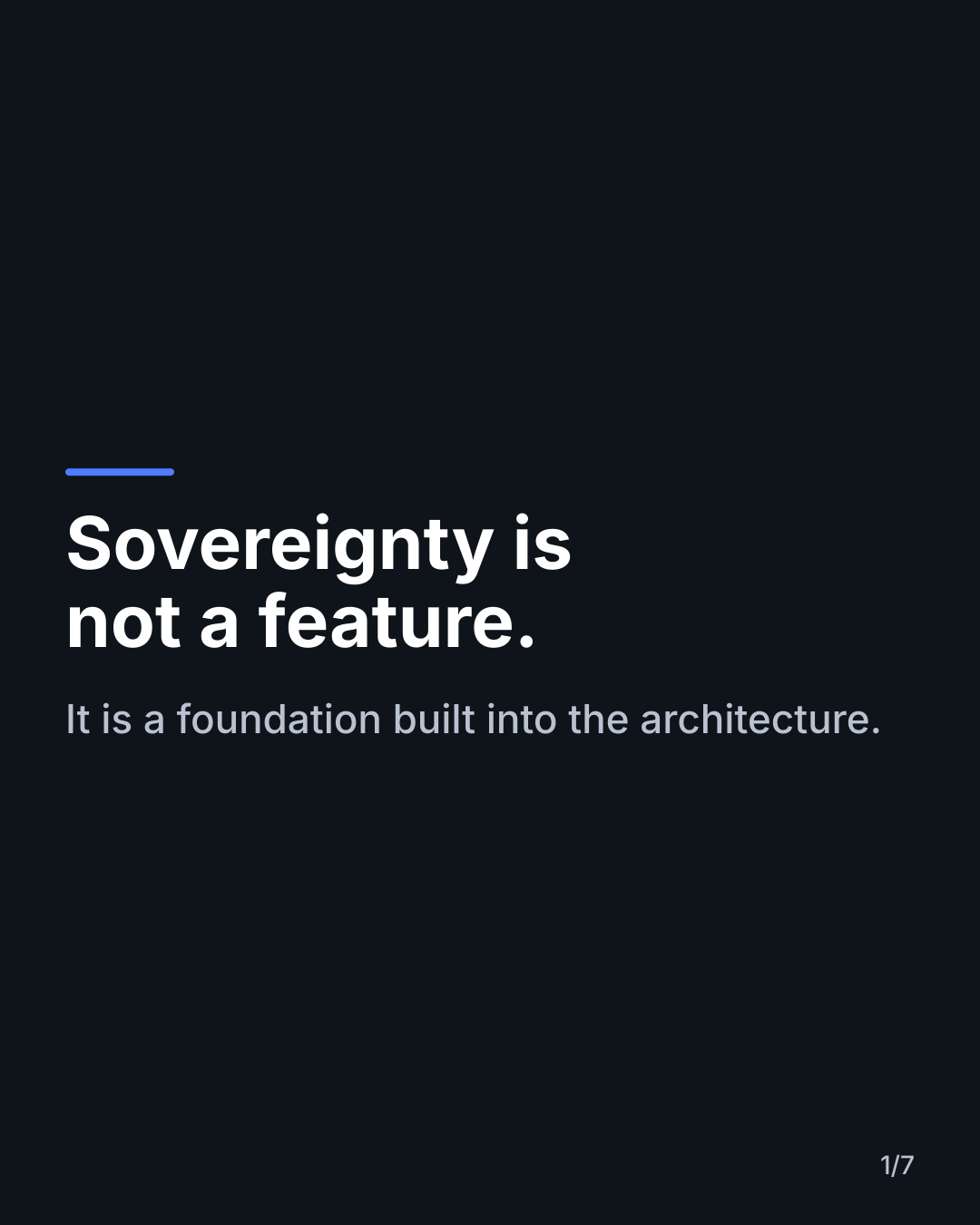
Sovereignty is not a feature added to a system but a foundation built into its architecture.
Sources:
Declassified Records - National Archives (archives.gov)
FBI, Millions of Records Declassified (fbi.gov)
NSA FOIA - National Security Agency/Central Security Service (nsa.gov)
Sources:
Declassified Records - National Archives
The National Declassification Center | National Archives
FBI - Millions of Records Declassified
FBI - Federal Bureau of Investigation
NSA FOIA - National Security Agency/Central Security Service
National Security Agency/Central Security Service > Helpful...
The carousel
Seven slides, the same argument in short form. Download the PDF.